
Disc injuries
About Slipped Disc
A “slipped disc” – often synonymous with a low back (lumbar) injury – is a misnomer because discs do not actually slip; they herniate or bulge out from between the bones. A herniation happens when a fragment of the center part (nucleus) of the disc is displaced and pushes through a tear in the outer layer (annulus) of the disc. When irritating substances are released from this tear, or if the fragment affects a nearby nerve, then the pain is caused. This process is similar to degenerative disc disease, and herniations can be an early stage of degeneration.
Causes for Herniated Disc
Discs can herniate due to various factors that decrease their strength and resilience. This can include certain lifestyle choices such as smoking, lack of exercise, and poor nutrition. Discs are further stressed by daily wear and tear, poor posture, injury or trauma, or incorrect lifting or twisting. A weakened disc can sometimes herniate from something as simple as a single everyday movement or strain, such as coughing, sneezing, or bending.
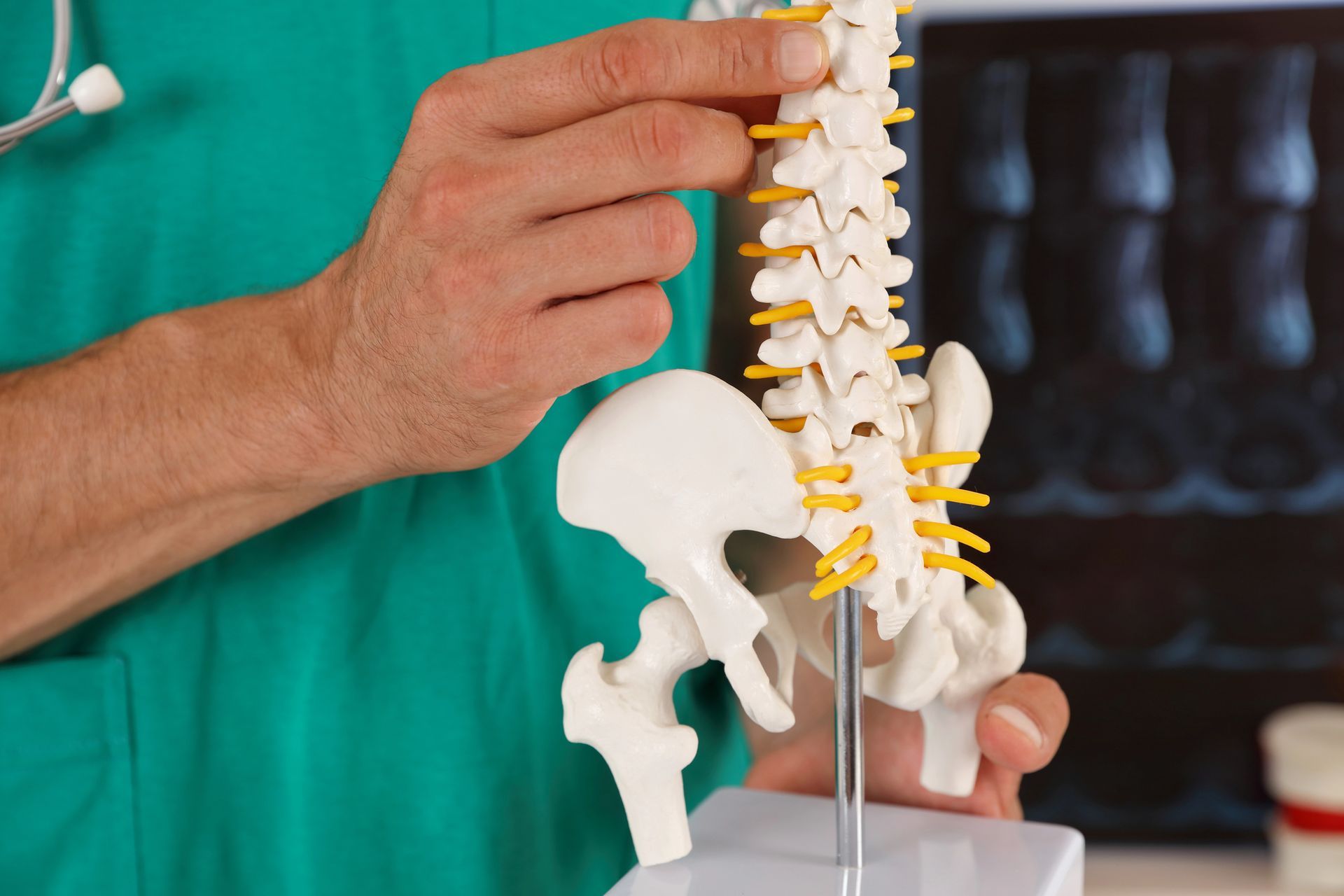
Treatment for a Herniated Disc
Chiropractic care, stretching, and exercise therapy are often sufficient to treat mild-to-moderate disc herniations. More serious cases will often require chiropractic care to be coupled with some form of spinal decompression, such as traction or mechanical decompression.
As a last resort, surgery may be needed when a herniation is severe, and all other treatment options have failed to bring improvement or if the spinal cord or nerves are too badly compressed.
Signs of a Herniation
You are more likely to suffer a herniated disc between the ages of 30 and 40, and you may not even know it when it happens, as it may not cause any pain. The most common symptom, however, is pain in the herniated disc that may radiate into the hips or buttocks, or pain or numbness radiating down the leg to the ankle or foot. A large herniation may cause limited extension of your big toe and difficulty applying pressure to your toes or heels when walking. Severe cases may even prompt changes in bowel or bladder function, and/or sexual function.
Schedule a consultation today!